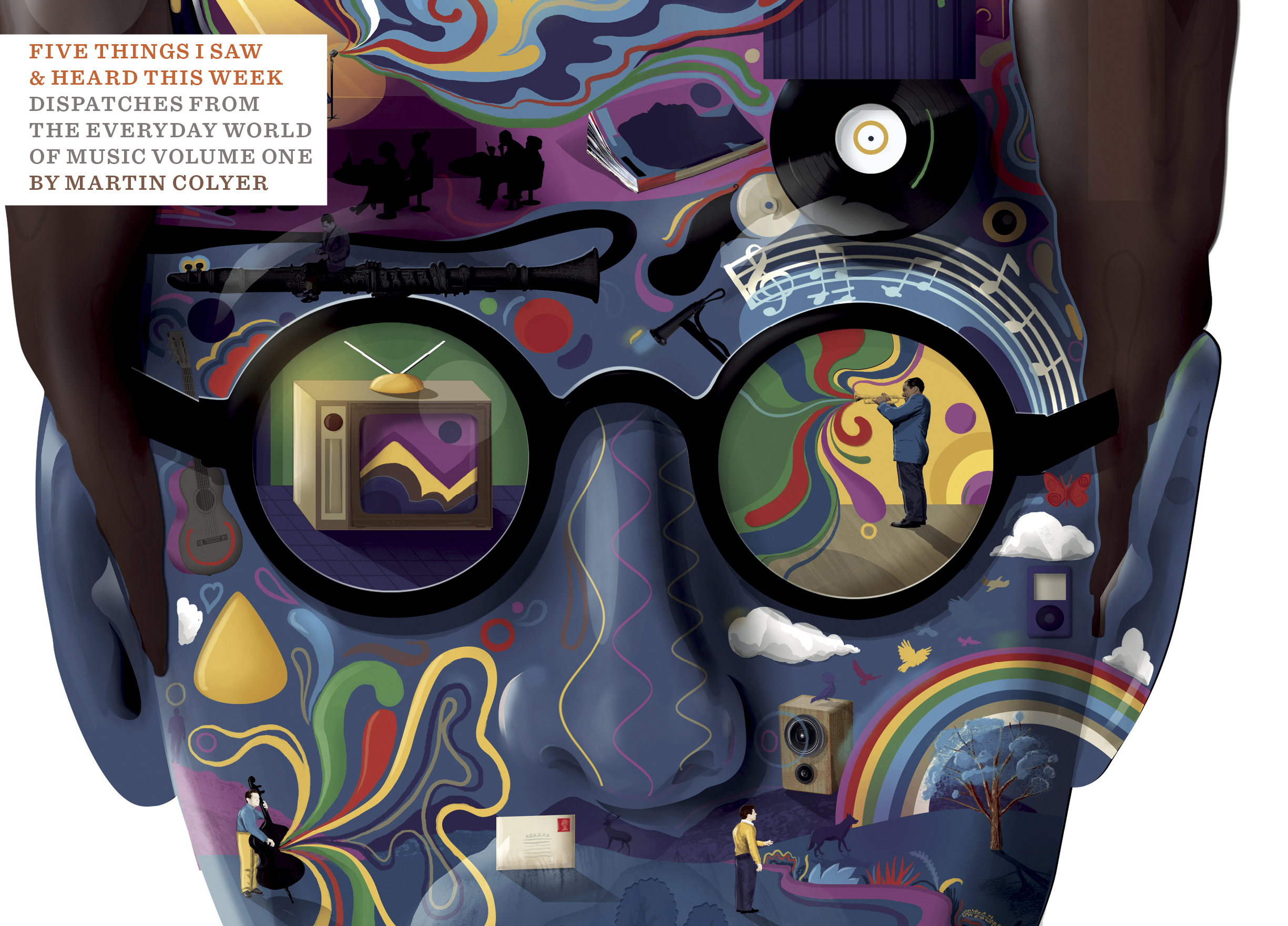
Super Hits (!) of The Sixties! Track 2

¶ “All of the heavies were light as a feather“ | “I Had a Dream” was sung at Woodstock by John Sebastian. It’s the second of five songs from a new project, Super Hits (!) of the Sixties! I’m aided and abetted here by my old pal Mark Pringle on guitar.

¶ On August 16th 1969, John Sebastian took to the stage at the Woodstock Festival with an acoustic guitar borrowed from his old friend, singer-songwriter Tim Hardin, to face the 500,000-strong crowd. Stage coordinator Chip Monck couldn’t risk wheeling amplifiers onto the stage because of the rain, so he prevailed upon a stoned Sebastian — there as a spectator, not a performer — to entertain the crowd.

¶ In his short set, he played some tracks off his new, 
as yet unreleased, album. One was “I Had a Dream”. In the studio, it was performed as a piece of Baroque pop with harps and a Bacharach arrangement — musically quite a departure for the Pop Chart darling, whose hits with the Lovin Spoonful included “Do You Believe in Magic,” “Summer in the City,” and Darlin’ Be Home Soon”.

¶ A year later, it was chosen as the opening song on the soundtrack of the movie Woodstock. It fit the occasion perfectly, its hippy utopian lyrics undercut by a tremulous melancholia that pointed to the dream’s impossibility… I’ve always liked John Sebastian’s music (and he’s the best interviewee, bar Henry Diltz, in any film made about Laurel Canyon), so I made a version, losing some of the tune, in my usual way, to make it even more depressing. I sent it to Mark [he had lent me a very expensive microphone and I’d recorded the vocal with it] and he volunteered to add some guitar. Which he did, one very enjoyable afternoon. His approach was to bring his current style of oblique flying condensation to drape over the tune.

¶ I always wondered if Bob Dylan had the Loving Spoonful’s “You’re a Big Boy Now” (written for Francis Ford Coppola’s film of the same name) in mind when he returned to Columbia’s Studio A to record Blood on the Tracks in 1974…

#johnbsebastian

#woodstockfestival1969
@pringbat
#freefromartificialintelligence

Five Things, Monday, September 29

[ONE] GATHER’ ROUND PEOPLE WHEREVER YOU ROAM
There are two beautiful tracks from Mavis Staples’ new album available on Apple Music. From Anti’s website: “To capture Mavis’ resonant phrasing and textured vocals, producer Brad Cook tried to build every song around that voice. He began with spare skeleton recordings, just drum and piano, and focused on recording her vocals. Then he expanded the song from there, trying never to overshadow or undermine the framework she’d established. He imagined a record in the tradition of Nitty Gritty Dirt Band’s Will the Circle Be Unbroken, a group of artists coming together to celebrate community — in this case, one centered on Mavis.” From the two tracks released so far, one by Frank Ocean [“Godspeed”], I’d say that’s been achieved… And Kevin Morby, writer of the other, had this to say: “hearing Mavis sing ‘Beautiful Strangers’ is hands down the greatest moment and highest honor of my career. Mavis also wields that extremely rare power to take a song somebody else wrote and make it entirely her own. As the person who penned “Beautiful Strangers” I feel I have every right to say, her version is better.” 

[TWO] FROM LIAM NOBLE’S EXCELLENT BLOG, BROTHER FACE
“My feeling is that humans have been hurtling forwards forever, changing and improving, streamlining and enriching their existence ever since the first one grew a surplus of something and sold it on. Progress is like a train, with us at the front looking ahead as history adds carriages in tow one by one, decade by decade, year by year. And now it feels like we are slamming on the brakes. What does the future hold other than a faster compilation of the past, quantum speed rehashes, consensus songs and a literature based on graduate CVs and job applications. All of these things AI does very well. And as the train stops, so the carriages come hurtling over us and through us and past us, shards and fragments of the old pummelling us into submission.”

[THREE] THE COOLEST WEBSITE I’VE SEEN RECENTLY
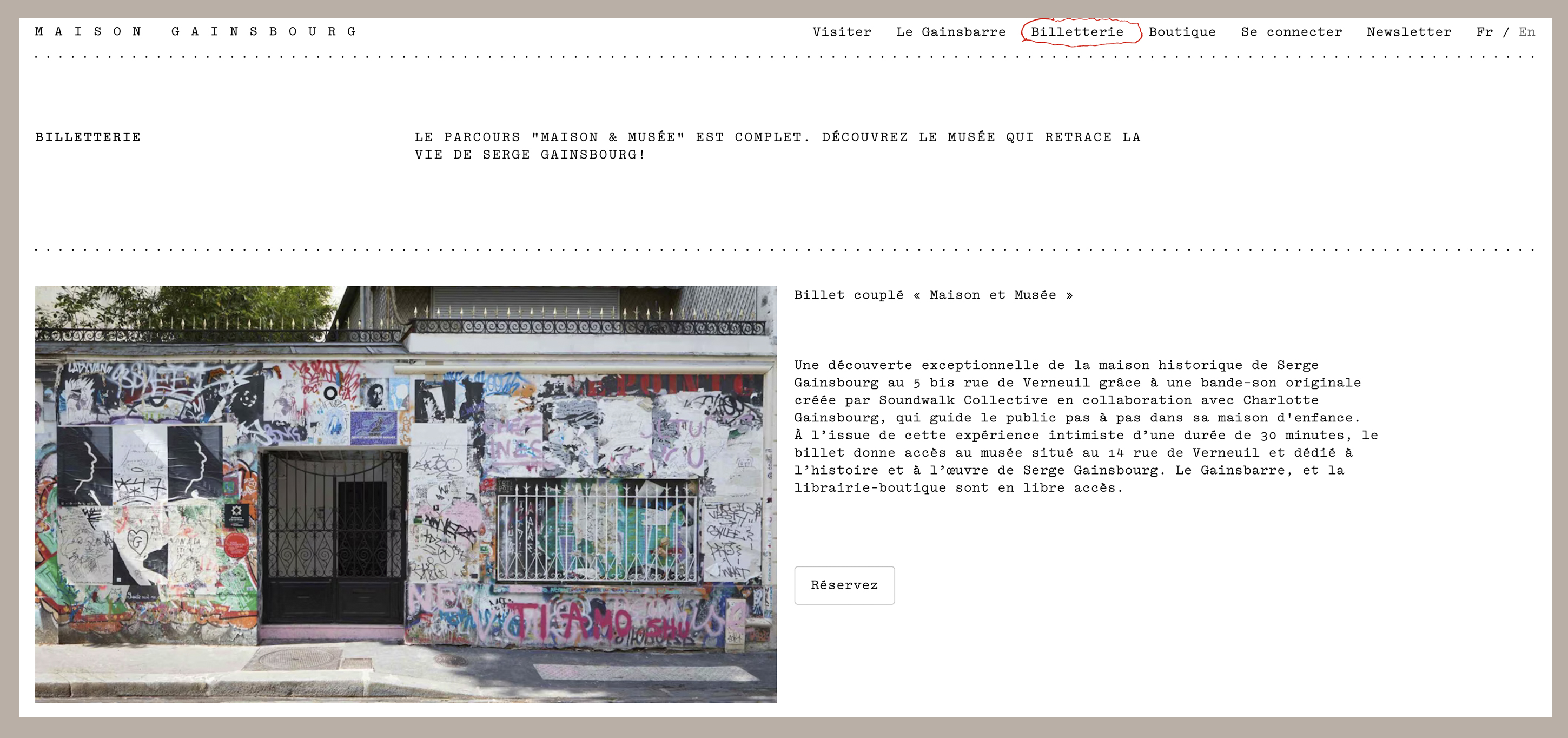
Serge Gainsbourg’s house has been converted into a museum, and I’m hoping to visit in November, at which point I’ll report back on whether it’s as as it seems. I remember that after his passing they auctioned off an ashtray with Gainsbourg-smoked butts, but I’m hoping they had plenty more ashtrays to choose from.

Exterior view of Serge Gainsbourg's house, which has been converted into a museum, featuring a graffiti-covered wall and an entrance door.
The French version of Maison Gainsbourg’s site

[FOUR] BOOK CORNER
Jonathan Taplin was The Band’s Road Manager (he found and rented Sammy Davis Jnr’s house for the recording of The Band, for instance) and then produced Martin Scorsese’s Mean Streets. He’s also very smart. I’ve just finished his excellent book, The End of Reality: How Four Billionaires Stole the Future, which I recommend. It’s terrifying, of course. At the beginning of the book, he quotes American historian Timothy Snyder, from his book, On Tyranny: “To abandon facts is to abandon freedom. If nothing is true, then all is spectacle.” Taplin then starts his introduction, “This book seeks to understand the role of four very powerful billionaires — Elon Musk, Peter Thiel, Mark Zuckerberg and Marc Andreessen — in creating a world where ‘nothing is true and all is spectacle’… The four men I am writing about want this outcome — where ‘all power and economic privilege remain in their own hands.’ And as Orwell presciently noted, this society would not be democratic in any accepted sense of the word. Andreessen, Musk, Thiel, and Zuckerberg’s disruptions of our notions of both capitalism and democracy are only going to increase in the coming years.”

”I think I lost it / Let me know if you come across it / Let me know if I let it fall / Along a back road somewhere” — “I Lost It”, by Lucinda Williams
[FIVE] THE SONGS THAT MADE ME FALL BACK IN LOVE WITH MUSIC
One | Shirley Ellis, “The Clapping Song” | Music wasn’t doing what it used to do for me — I wasn’t, in Nile Rodgers’ words, getting lost in music. I think it was also due to having the entirety (almost) of recorded history, everything, everywhere, all at once. And it felt like everyone, everywhere, would have access to everything — so what was the point in writing about it? I decided to try to listen only when that was all I was doing, in an attempt to remember when I loved music unconditionally.

If you’ve heard “Apt.”, a song by New Zealand and South Korean singer Rosé and US superstar Bruno Mars, you’ll know that nonsense songs never go out of fashion. Every few years, one rolls around; this time, it came with a mixed heritage. Using elements from the none-more-American “Mickey” by Toni Basil, the song’s chorus is built around a South Korean drinking game chant, “apateu” (apartment). Starting out sounding close to the Ting Tings, it’s slightly let down by the smooth popiness of the chorus, which sounds like it was flown in from an entirely different tune. Anyhow, it’s popular among the younger set, even a year after its release, but for me, it dialled up something from 1965, “The Clapping Song (Clap Pat Clap Slap)” by Shirley Ellis. Co-written with her manager and husband Lincoln Chase, it still sounds fantastic today. From simple cymbal strokes, it suddenly bursts into a Bo Diddley-like beat, with maybe a side order of New Orleans strut. It’s just drums and vocals as Shirley and her chums sing…
“Three, six, nine, the goose drank wine / The monkey chewed tobacco on the streetcar line / The line broke, the monkey got choked / And they all went to heaven in a little row-boat…”The bass joins in, playing a single, rumbling note to kick the beat up a notch. Horns stab, a baritone plays deep notes, and Clap and Pat Instructions follow. By the time the next chorus kicks in,
“My mother told me / If I was good-ee / That she would buy me / A rubber dolly. / My aunty told her / I kissed a soldier / Now she won’t buy me / A rubber dolly…”
It’s with what sounds like a bagpipe drone. The drums pound. The horns stab more. The chunky rhythm guitar gets louder. At the end of that, the drums catch fire behind the vocals. Each part of the musical patchwork is working towards one seamless tapestry, driving the song forward. Shirley intones over the cymbal break, “Take the flats of your palms and slap your thighs and watch the fun materialize, as you sing this little song…” and then we’re on the home straight, with everything piling in… I love it. You may recall it from The Belle Stars’ cover in the ’80s. It was tightened up with a programmed beat to the point that the song’s freedom went missing.

Back next week, hopefully fresh from seeing last year’s favourite Work From Home soundtrack, CMAT… and wishing a speedy recovery to a good friend of Five Things, Richard Williams.

Starting All Over Again

It’s time to start writing about music again. As I limber up, here’s a placeholder.

¶ I’d heard the song for the first time in years on one of the last episodes of the TV series, Mad Men. Brian Hyland’s 1962 puppy-love pop classic (#3 on both US and UK charts) has a naggingly dark/slightly hysterical melody that stuck in my head for days after watching the programme. On one hand it’s an over-ripe teen anthem, on the other a singular melody that doesn’t sound like a “pop” tune at all. I fitted a moody, dragged-out beat underneath the guitars, aiming for a Badalamenti mugginess.
¶ Having roughed it out thus, Mark P came to play “Next!” — a game where I play Mark tracks in various states of completion and he either responds to them, or doesn’t (and hence “Next!”). He has no knowledge of what I’m going to serve up, and sometimes it hooks him in enough to play multiple takes or work a part out. He played, I think, three passes on this song, adding his tensile guitar to the mix.
¶ An idea had occurred to me, a while before, to hire a bona-fide musician (Mark’s one, but he works with me for lunch and wine). And I thought of horns on this, so I emailed the wonderful Paul Taylor, who I’d seen, and enjoyed, with improv outfit the Horseless Headmen. I trepidatiously waited for a reply to my request that he write horn charts for a couple of songs, and was hugely thrilled when he said yes.
¶ Paul’s a great musician and a lovely chap to spend a day with. We discussed a ridiculous range of music, from trad to bebop, from The Bureau via Improv to Trombone Poetry. Having tuned up the part of my brain needed to cope with engineering a live trombone session — we set to. Paul methodically and with great precision overdubbed the trombones that you hear here. Then, realising that it was missing a bass track, and having seen Andy Cleyndart playing with my old friend Sammy Rimington, I asked him if he would do a session, working on various songs. So I then had to engineer a double bass session.
¶ So did their pledge hold? It’s September and we need to know… Here‘s my take, in all its crepuscular glory. This is one of five songs from a new project, Super Hits (!) of the Sixties!
¶ n.b. Brian Hyland moved to New Orleans in the 70’s and recorded an album, In a State of Bayou, produced by the late, great Allen Toussaint. I think Brian’s still touring today.

¶ Lead guitar | Mark Pringle | Trombones arranged & played by Paul Taylor | String Bass by Andy Cleyndart | Vocal, rhythm guitars, vibes & song arrangement by Martin Colyer. The first of the revived Five Things will follow next week.

Extra! A Christmas Song for 2024

Season’s Greetings & a Christmas Song | All the best to all Five Things readers

So, this year’s Christmas song is “Silent Night”. Written in 1816 by Joseph Mohr, with music by his friend, Franz Xavez Gruber. My version is an unholy mix of “Nightshift” by The Commodores (I wish) and Robbie Robertson’s soundtrack to Killers of the Flower Moon (I also wish).

Even as a child I baulked at the “tender and mild” line — always odd, now it brings to mind supermarket descriptions of steaks and bags of salad… so I used a more accurate translation to English (by Bettina Klein), which keeps the spirit and meaning of Joseph Mohr’s original.

The traditional English version of “Silent Night” has only three verses. These are the first, second and last verses of the six verses of “Stille Nacht! Heil’ge Nacht!” written by Mohr. I’ve used four verses (otherwise, this would be ten minutes long…). The painting in the video is Le Seize Septembre by Rene Magritte. Enjoy!

Silent Night! Holy Night!
All is calm, all is bright
Round yon godly tender pair
Holy infant with curly hair
Sleep in heavenly peace
Sleep in heavenly peace.

Silent Night! Holy Night!
Brought the world gracious light
Down from heaven’s golden height
Comes to us the glorious sight:
Jesus, as one of mankind
Jesus, as one of mankind.

Silent Night! Holy Night!
Long ago, minding our plight
God, the world from misery freed
In the dark age, our fathers decreed:
All the world is redeemed
All the world is redeemed.

Silent Night! Holy Night!
Shepherds first saw the sight
Of angels singing alleluia
Calling clearly near and far:
Christ, the Saviour is born
Christ the Saviour is born.  

Last year’s song can be found here

And four previous songs can be found here

Extra! When I Paint My Masterpiece

FUN WITH BOB | Bob Dylan. Bo Diddley. Brazilian Drumming. Amusing-to-make video. Another month, another Bob cover — I love this song, but I put this here feeling that I never quite got it right… I can’t spend any more time on it, so here it is for your amusement or otherwise. Five Things proper will return in September — best to you all.

Extra! Happy Birthday, Bob

Recorded for fun in the early days of Garageband, circa 2011 — the sentiment remains true to this day.

Extra! Daniel Kramer’s year with Bob Dylan

I’m re-publishing this following the passing of one of my favourite “Dylan” photographers. It was originally written for Pulp magazine in 2017.

Bob Dylan: A Year and a Day. Photographs by Daniel Kramer

Edited by Nina Wiener / Art Direction by Josh Baker / Design by Jess Sappenfield
Published by Taschen, hardcover in a clamshell box, edition of 1,965 (cute!)

“In retrospect, it’s clear that Bob was in the process of winding up a very large spring. I didn’t know then 
how much of that spring would be let loose in the coming months.” – Daniel Kramer

On July 20th 1965, Bob Dylan, the star of the Greenwich Village Folk Boom, exploded onto the pop charts. America’s first modern singer-songwriter, Dylan, in the six minutes and thirteen seconds that it took for the epochal “Like a Rolling Stone” to be debuted on US radio, virtually created grown-up rock music. But Dylan’s spectacular reinvention of himself and his music had not just happened overnight – it had been brewing for a while. At the beginning of this astonishing, game-changing period – the like of which had previously been the preserve of fine artists such as Matisse and Picasso – photographer Daniel Kramer found himself, through a mixture of talent, persistence and chance, in the position of recording the highs of an extraordinary year in the life of Bob Dylan.

Having first seen Dylan on Steve Allen’s variety show in February, 1964 (“It was the kind of sound I always liked. It reminded me of a voice from the hills… like a voice that had been left out in the rain and rusted…”) Kramer decided that he had to photograph this performer who was brave enough to play songs about social injustice on a mainstream tv show. He called Dylan’s management: “Naturally I was told Mr Dylan was not available. And so it went. I would call, and they would say no.” Eventually, Dylan’s manager, Albert Grossman, picked up the phone. “By this time he knew why I was calling. I convinced him that I was a reasonable, completely sane, published, professional photographer. I was caught by surprise when his almost immediate answer was, Okay, come up to Woodstock next Thursday. You can have an hour. Just like that… just like that!”

5-dylanbook2

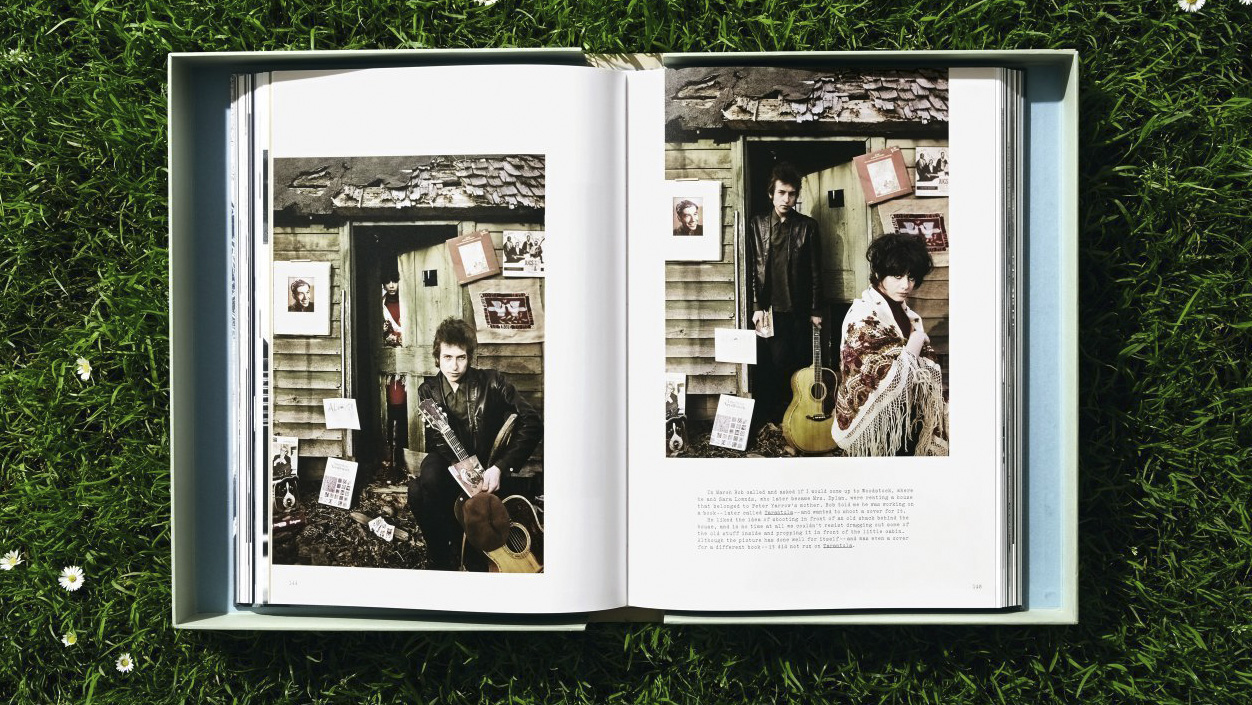
So Kramer drove two hours north of New York City on a bright August morning and spent the day following the 23-year-old musician as he read newspapers, played chess, and hung out with Sally Grossman (Albert’s wife) and his own wife-to-be, Sara Lownds. In the early Sixties, Woodstock was still a sleepy burg, a place where Dylan could keep the increasing intensity of life in New York at bay. The pictures are winningly relaxed and goofy, Dylan obviously finding Kramer a copacetic presence, and from that simple beginning, Kramer found himself photographing Dylan on thirty occasions over the next 365 days.

Kramer had come to photography early, aged 14, and later fell into a job working as an assistant at the studio of the fashion photographer Allan Arbus. “His wife, Diane Arbus, also did her darkroom work there – it turned out to be more than just a job. From Allan I learned to manage a studio, work with models, and run the business – and from Diane, I learned to open my eyes a bit wider, to think about my pictures in new ways.” His next gig was assisting Philippe Halsman, legendary Life magazine cover photographer. “From Philippe, I learned how to make light do your bidding, instead of the other way around, and how to choose a decent wine – and that photography could be a great adventure and a pathway to the whole world.”

5-dylanbook.jpg

From Kramer’s fascinating recollections in the accompanying text, we find that he becomes one of Dylan’s travelling companions. In this role, he’s given both space and time to produce meaningful work. It’s a hallmark of Dylan’s relationships with the producers, musicians and photographers who come into his orbit – once they are admitted, they are allowed to bring their vision with them. Only Alfred Wertheimer on his trips around the country with a young Elvis Presley had such access to a popular star, with similar results – to show the nuts and bolts of the music business and lift the veil at the moment that the cultural plates were shifting.

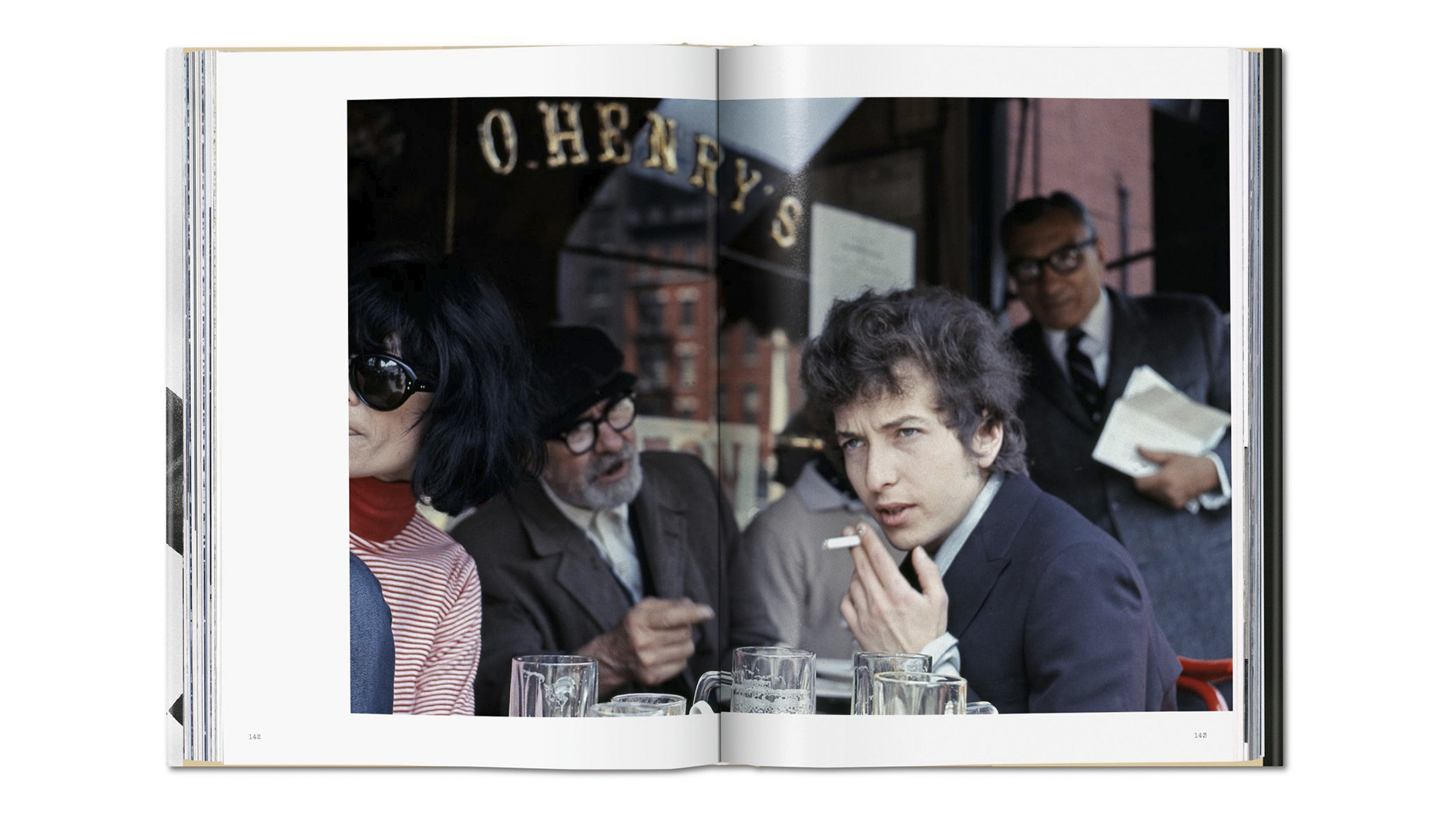
Listen to any of the session tapes of recent release The Cutting Edge (every single note of music Dylan recorded, complete with false starts and unused takes, throughout 1965, the year of Kramer’s book) and you’ll find that Dylan’s moulding of what’s happening is subtle and understated, only occasionally direct and demanding. And if you met his approval, his world was your oyster. Kramer takes full advantage, producing classic black-and-white reportage backstage, onstage, in cars and cafes.

The book, beautifully laid out, is broken into sections (Woodstock / Town Hall / In the Studio / Bob & Joan / Early ’65 / Forest Hills) by lyrics letterpressed onto heavy matt paper, with Kramer’s excellent narrative set in typewriter, an era-specific evocation of the prevailing technology of the time.

5-dylan2

The sheer size of the book lets you feel that you’re at a really well-curated exhibition, one where the scaling and sequencing of the images are perfectly judged. The detail drawn out of the gorgeous grain of the 35mm Kodak Tri-X film that Kramer used is wonderful, and the book is a much more satisfying way to see these photographs than as individual prints in a gallery.

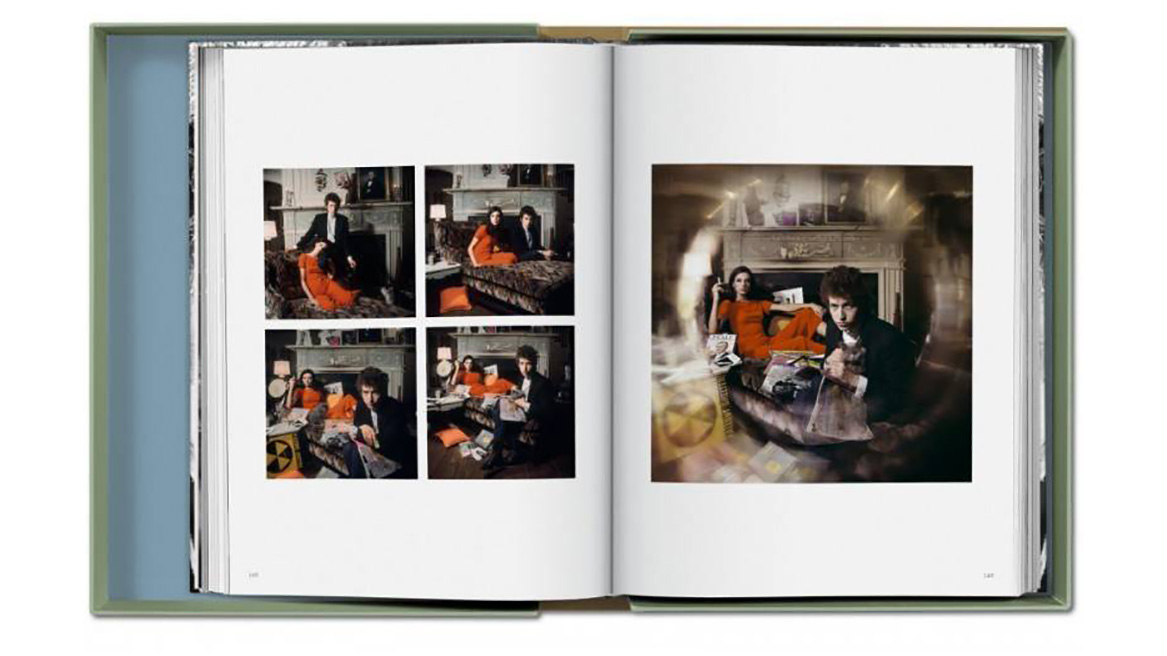
The colour film that Kramer shot of Dylan, the cover session for Bringing It All Back Home, one of the two albums he would release in 1965 (the other, Highway 61 Revisited, also had a cover shot by Kramer) sits happily at the centre of the book, in a section called “Intermission”. Kramer’s studio shoots (including a meeting at Kramer’s New York studio that would provide the cover for Dylan’s first book, Tarantula) give a break between the reportage either side and show that his earlier experiences in the studio with Arbus and Halsman served him well.

5-dylan1

But first, he needed the persuasive techniques of Bob’s manager to make these shoots happen. After Columbia’s art director, John Berg, refuses to commission the (as he saw it) inexperienced Kramer to shoot the cover of Bringing It All Back Home, Grossman intervenes. “Mr Grossman took us [Dylan and Kramer] to the art director’s office, where he proceeded to make a series of predictions of what bad things would happen [to Berg] if I did not get this assignment.”

Having been present at the recording sessions, Kramer knew that he had to deliver something that related to Dylan’s new direction – and a technique he was working on for a fashion shoot with his 4×5 view camera seemed perfect. It enabled him to make “multiple exposures on one sheet of film while moving, blurring, or keeping sharp parts of any single exposure”, a world away from the fly-on-the-wall 35mm reportage that Kramer had been shooting up to this point.

Arranging Dylan in a room set at Grossman’s Woodstock house, with Sally Grossman draped decoratively on a sofa, Kramer adds elements to make his technique work. “We scoured the house and basement to find things to put in the picture so there would be things to ‘move’ when the camera back was revolved. I wanted to say that Bob Dylan was less a folksinger and more a prince of music. So there in the centre of the turning record is Bob Dylan without an instrument, in this beautiful room, seated with a beautiful woman in a red dress… we were lucky to get one exposure with the cat looking into my lens.” Kramer can’t resist telling us that he and John Berg were nominated for a Grammy Award for best album cover photograph…

5-dylan4

Around this time, a new Dylan snaps into view, as the pages turn from images of joking around with old friends to those of Dylan with an early hero, Johnny Cash. Dylan is about to play one of his last acoustic shows and has morphed from the chubby-faced Chaplinesque troubadour to a more angular and focused presence. Over dinner with Cash, he seems to be burning with a particular intensity, fixing Dan Kramer and Cash both with a piercing gaze.

The next stage is about to begin in earnest, and it will lead to the alienation of Dylan’s loyal fanbase. His artistic horizons are widening to take in Pop Art and filmmaking – from Greenwich Village to the Warhol factory was only a matter of a few downtown NY blocks, but in 1965 it was an artistic chasm. On one side, the gruesomely authentic folksters, on the other, the achingly hip (yet blatantly commercial) scenesters. As Dylan moved inexorably across from one to the other, the air was thick with cries of Sell Out! and worse. Kramer finds himself shooting from the inside out.

A show at Forest Hills with electric backing will plunge Dylan into a maelstrom that the world of rock has rarely seen, as a performer’s desire to follow his muse sees him branded a Judas and pelted with objects. Visually, Dylan’s look begins to assume the sharp outlines of an icon – even in a close-field blur, with Albert Grossman far away in the stands of the Forest Hills stadium, Dylan is instantly recognisable, entering the period where he would be drawn by Milton Glaser as a rainbow-headed visualisation of the grooviness and excitement of the middle sixties.

5-dylan forest

And that concert signals the end of Kramer’s travels with Bob. The last shots are of Dylan at one remove from his audience, backlit by blinding spotlights as someone invades the stage, chased by cops. A tour of the US and Europe awaits Dylan, his world accelerating until it culminates in a motorcycle accident that will remove him from the public glare for the following years.

Daniel Kramer moves onto a long and successful career straddling editorial, advertising and motion-picture work, and never photographs Dylan again. And Dylan? Well, he’s still “on the road, heading to another joint…”, not stopping long enough to be pinned down. But we, luckily, have this epic production to linger over, reliving that remarkable year when the times were truly changing.

If you’re receiving the email out, please click on the Date Headline of the page for the full 5 Things experience. It will bring you to the site (which allows you to see the Music Player) and all the links will open in another tab or window in your browser.

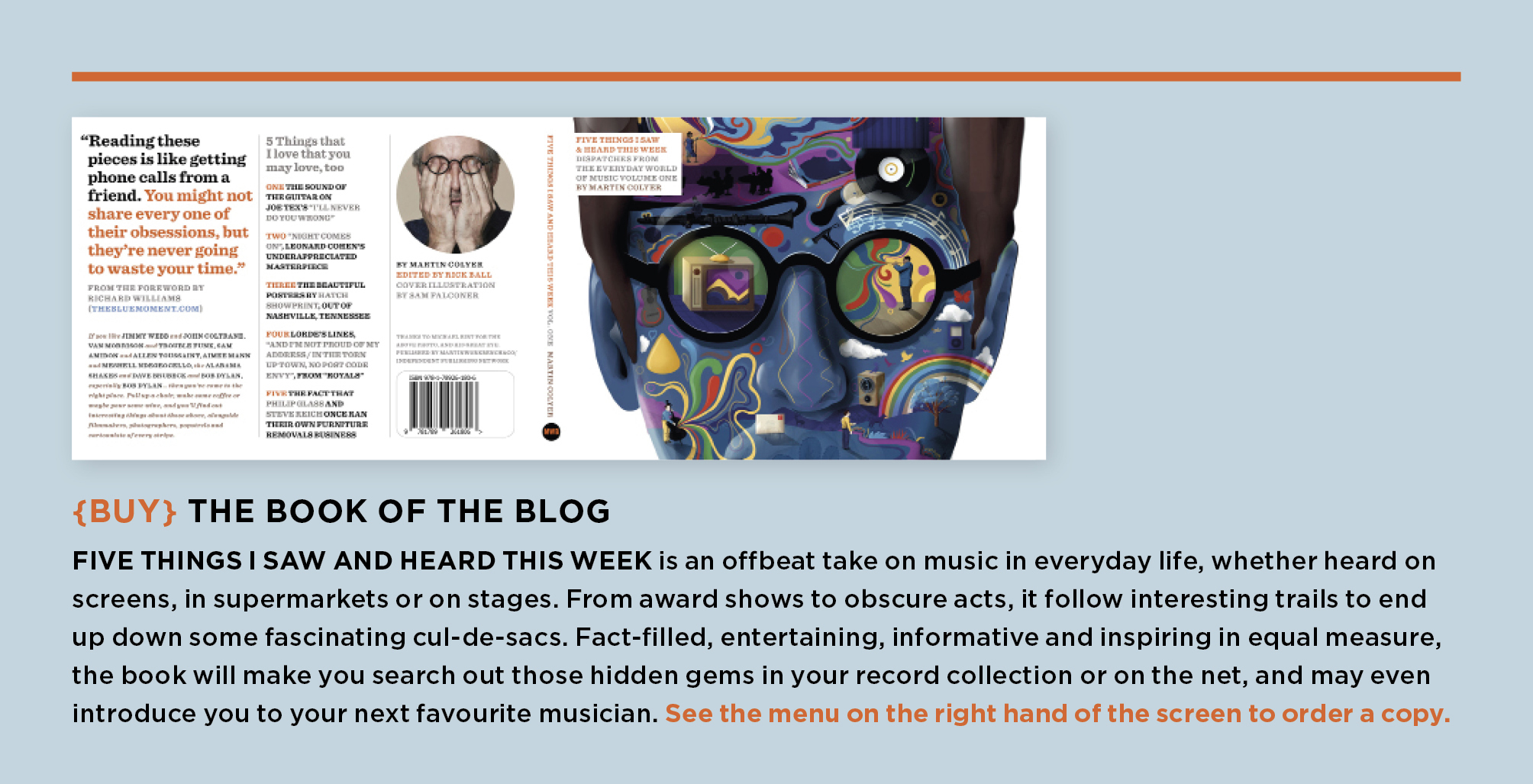
The book of Five Things is available from Amazon here.

Front Cover

“He writes with the insight of someone who has inhabited the world of the professional musician but also with the infectious enthusiasm of someone who is a fan like anyone of us. He also comes at the subject from an entirely personal, slightly sideways perspective, with no agenda and no product to sell. It’s entertaining and inspiring in equal measure.”

“A terrific book, stuffed to the gills with snippets of news items and observations all with a musical theme, pulled together by the watchful eye of Martin Colyer… lovingly compiled, rammed with colour photos and interesting stories. Colyer has a good ear for a tune, an eye for the out-of-ordinary and he can write a bit too.”

Two Things only! April 18th, 2024

These are my thoughts after watching Ripley, and as we’re heading back to La Isla Mínima I thought I’d put an Instagram post from our trip last year on Five Things…

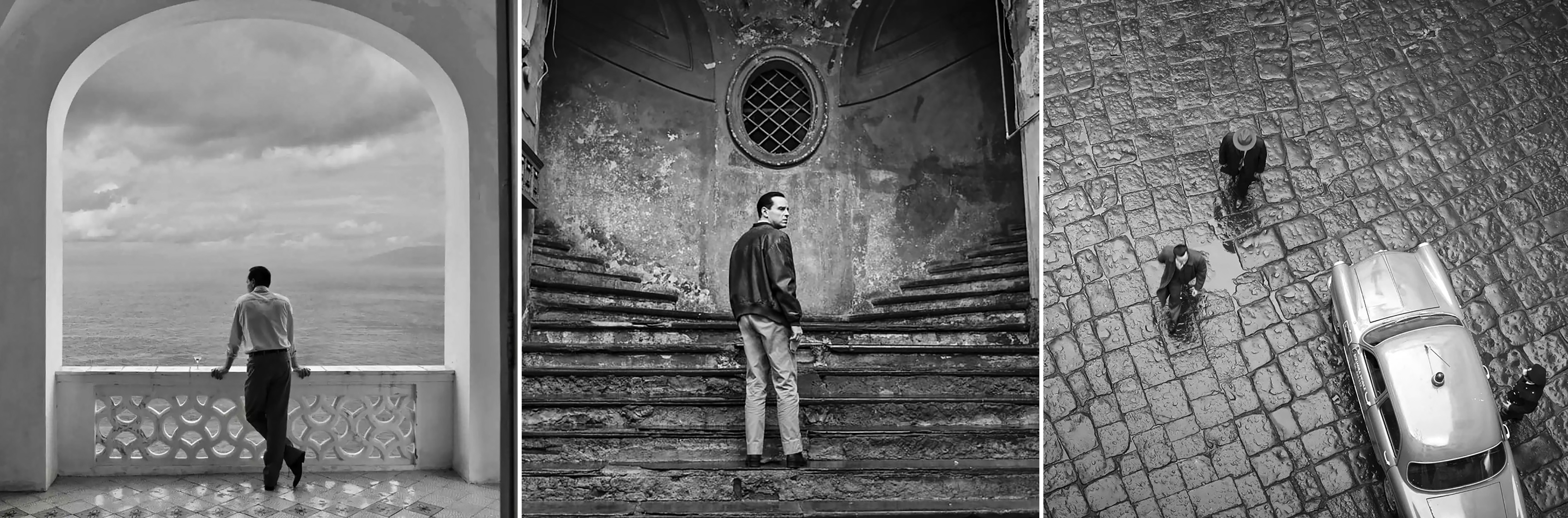
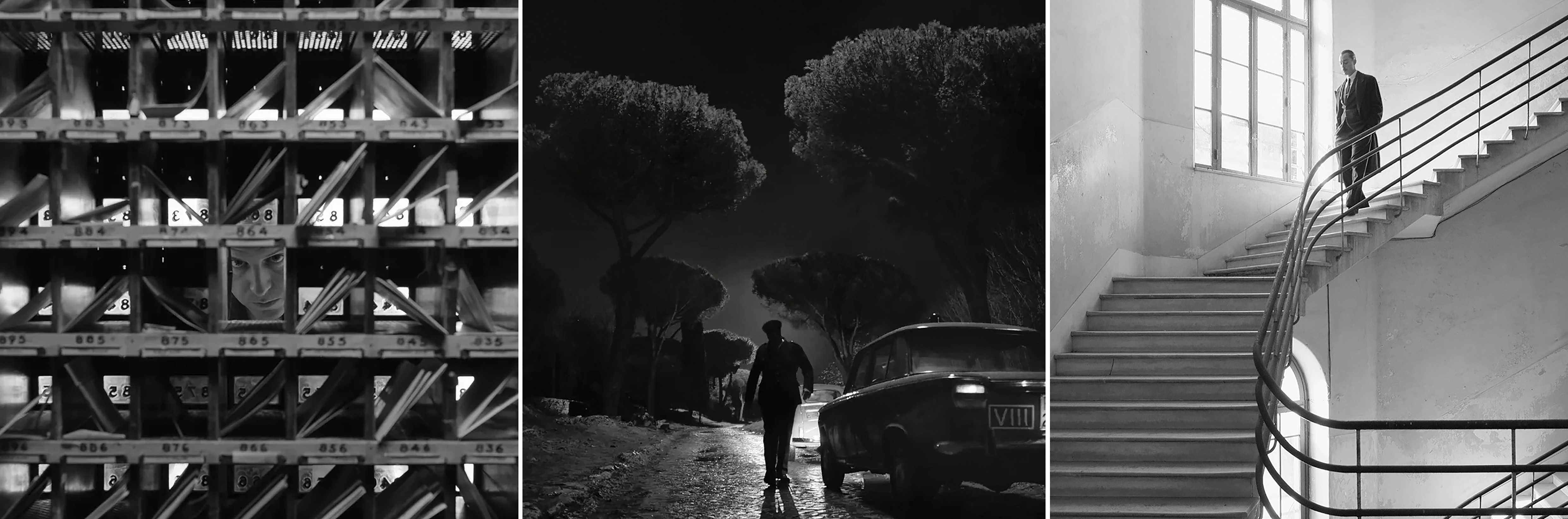
{ONE} Steven Zaillian and Robert Elswit’s RIPLEY (Netflix)

If you want to watch this series about an amoral chancer, you will pay for the pleasure. You will be put through the mill. You won’t cast off the deaths like in a two-hour film. You’ll come face-to-face with the real-time problems of murdering someone, especially when those acts weren’t premeditated but arose from a build-up of tension turning into a red mist. If you kill someone on a boat that’s some distance from the shore, this is how it goes down. None of your ideas work, you’re covered in blood, the rope holding the anchor won’t break, and when you do figure that out, it will come to bite you as you fall off the boat and it’s set ploughing a spinning circle, dragging said anchor at speed towards you every rotation. By you, I mean Tom Ripley, of course. The murder and its aftermath last about half the episode — deliberately saying; this may not be your kind of murderous film noi

It may also not be your film noir because it has the pace of a film from the 50s. RIPLEY is brave enough to inhabit a world where letters and landlines were the only way to communicate; there were few elevators (but many stairs) in crumbling southern European cities and coastal towns, and life moved at a snail’s pace (appropriately for Highsmith). In today’s world of everything everywhere all at once, this can be a tough watch. Looking at Fallen Idol now, say, or The Third Man, through eyes blasted by the internet or the Marvel Universe, it will drag. But there’s something magnetic in RIPLEY’s formal brilliance — the repeated shots of trains and ferries unhurriedly taking the characters to their next fated appointment — that gets under your skin and keeps you gripped.

It was totally consistent, unlike those series that start with an obvious set of tricks and angles, but by episode four have gone to hell; RIPLEY followed through to the bitter end, a queasy tension permeating its entire length. The directorial vision was so controlled that it was interesting to read an interview with the director and cinematographer in Vanity Fair, where it became obvious that many of the shots were unplanned — most astonishingly in the overhead shot that introduced Dickie and Marge as they lay on the beach, where the shadow of Tom walking up to them falls across the couple.

I’ve never seen a film with so much outrageous patina — the walls, the churches, the leather chairs, the churches, the bench the cat sits on. It was like the casting was also patina-driven: the supporting characters were stunning — you looked forward to the next postman, hotel receptionist, or mafioso being introduced, so you could glory in their fascinating faces, lit in chiaroscuro as they reacted to our (not so charming) grifter. So, hugely recommended if you love the work of Margaret Bourke White or Lee Miller, Carol Reed or Fellini, Gordon Willis or Sven Nyquist. Me, I’m looking for a pair of sunglasses to turn the world monochrome for the summer.


{TWO} LA ISLA MINIMA

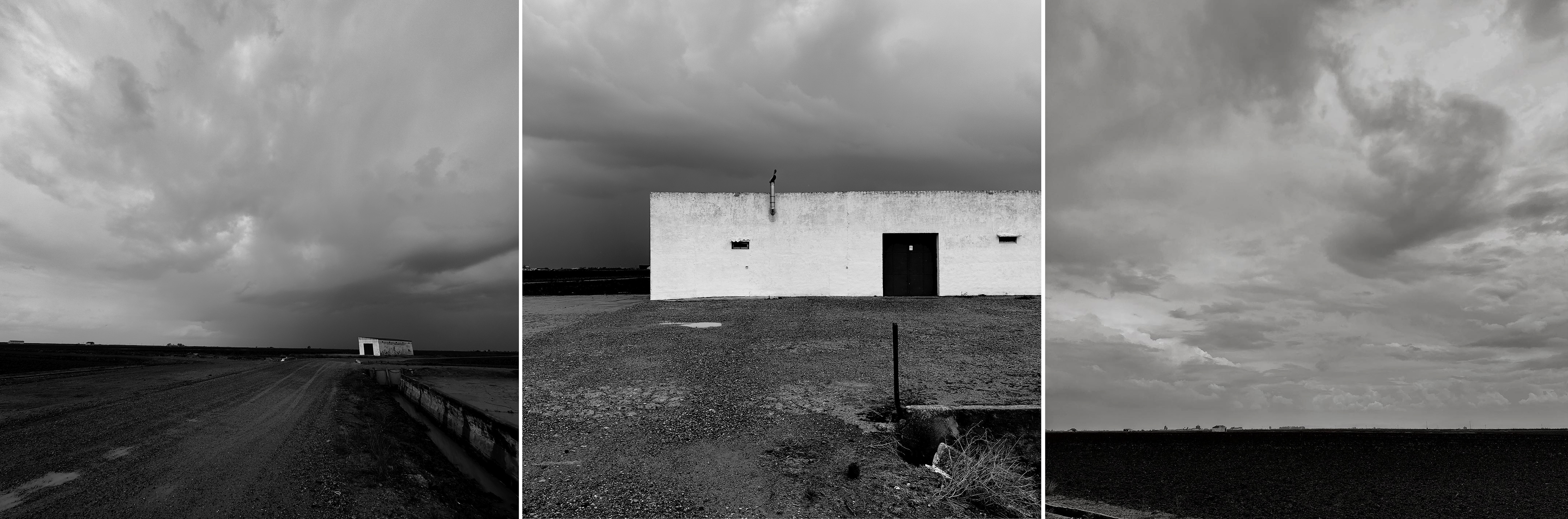
We drove to Isla Mayor on a one-way-in-one-way-out road with a bootful of out-of-date medications and a kitchen knife wrapped in a towel. We went there because of a Spanish film we saw, beguiled by its extraordinary setting, and because we love edgelands, those liminal spaces that have their own peculiar atmosphere. The film was called Marshland — in Spanish La Isla Mínima — a policier set in the 80s, but dealing with problems rooted in the Franco era.

Isla Mayor didn’t disappoint. This region, part of a national park, produces 40% of Spain’s rice, is as flat as the fens and consists of miles of paddy fields. As we ate crab tails in a local restaurant, thunder rolled in from the north, the heavens opened, what seemed like a month’s rain fell in half an hour, and everyone was deliriously happy — as a poster on the wall said: “Water is Life, we save the Island, we save an entire people!” The woman who ran the bar dived into the rainy streets to fetch her car to drive a local diner home through the downpour, back in time to bring us our cortados.

Much like the River Po in Italy, where rice is also harvested, the area needs water to exist, and is in crisis in a time of global warming. It’s an hour from Seville, but its wildness feels like another country. When we’re home, we’ll re-watch Marshland, for its spot-on evocation of this eerie landscape. Oh, and the medications? We’d cleared them from our old friend’s boat and no chemist would take them. And the knife? We had some giant Spanish apples that we needed to cut into manageable slices…

A song about Soho, bakeries and fathers

Why today? So, on my dad’s birthday (he would have been one hundred and two today), a song about our Sunday trips to buy bread in Soho. I was brought up on Charing Cross Road, on the edge of Soho, where everything we needed was: food shops, liquor stores, barbers, music venues (for my dad), the wonderful magazine shop where I bought comics, and various school friends. There was a bakery, hidden down a slope, that supplied the restarants of Soho and beyond, and where locals would go and get fresh baguettes, hot from the ovens. The smell of fresh baked bread still gives me a Proustian rush. I just wish I could remember the name of the bakery…

What inspired it? I was listening to Ella Fitzgerald’s “Cry Me a River” and became hypnotised by its intro — Herb Ellis on guitar and Joe Mondragon on bass — so I looped it. I chopped up some electric piano and organ loops and then played some very reverbed guitar over the top. Walking in Soho one night, I passed Bourchier Street, and the lyrics started there, suggesting a use for the loopy track. I felt that I should use some of the names of the places we frequented (Camisa, Lina Stores, Ronnie’s, The Nellie Dean, Moroni’s… I got one wrong, Gerry’s, which didn’t open until the 80s, and I didn’t have time to re-record it — let it stand for all of Soho’s liquor stores!) 

About “Cry Me a River” Arthur Hamilton wrote it for Ella Fitzgerald to sing in Pete Kelly’s Blues, but it didn’t make the edit. It was then recorded by the languorous Julie London, and that version was used in the Jayne Mansfield film The Girl Can’t Help It. Wikipedia: “The jazzy number was a remnant of the past in a picture that otherwise celebrated the emergent beat of rock ‘n’ roll, but that didn’t prevent its selling millions and becoming one of the most covered standards of all time”. The bass and guitar on Julie’s version were played by Ray Leatherwood and Barney Kessell (who also arranged it).

Thanks to Calum (likeahammerinthesink) I hear the brilliant set of podcasts made by Clare Lynch for The Photographers Gallery, which solves the mystery (only my mystery, obviously) of the name of the bakery. Here’s a transcript…
Claudio Mussi: In the sixties there was the 2i’s Coffee Shop, next door to Camisa, where all the pop stars used to go. Bar Italia of course was there, where we all gathered in the afternoon to have a cup of coffee. Moroni, the news agent was very famous in London in the ‘60s, because he was the only one who used to sell Italian newspapers. The Italian people are crazy about football. On Monday, Gazzetta dello Sport used to arrive about 3 o’clock from Italy. In those days it used to come by plane from Milano, between 3 and 4. There used to be a queue, all waiters and chefs coming out of the restaurants in Soho, rushing there, queue up and wait for the newspaper to arrive so they could read the football Italia results. Because there was no other way of knowing the results.  And here, where La Perla was, there was a branch of a chocolatier, a firm that used to make chocolate that was in the corner of Great Windmill Street and I cannot remember the name. See this is a classy street now! Floris, Floris also used to be a bakery, a chocolatier. It used to be down there, I think, Floris the bakery. And this used to be a chocolatier. Armin Loetscher (Sweetie): I’ve been in London since 1959. I used to work as a pastry cook, when I worked for Madame Floris. You had to have a permit, then, you know to come in. But I worked in Zurich for a patisserie, and she knew Madame Floris. And she got me the job and I got a permit and worked there in Bouchier Street, Bouchier Street there, you know where the flats are, that used to be a bakery.

At the Edge of Town / A Song for Richard Manuel

Every April I think about Richard Manuel, born on April 3, 1943, in Stratford, Ontario. I still remember where I was in March 1986, when I heard that he had taken his own life — the magazine art department of The Observer newspaper. I remember feeling unmoored for days, which seems too much of a reaction for someone I hadn’t met or known personally, but The Band had been such an important musical influence on my life. They were my equivalent of another generation’s Louis Armstrong or Hank Williams or Charlie Parker. When Sam and Ann Charters came through London on their way to live in Sweden in 1971, Sam had brought me five of his favourite albums as a gift. One of them was Music From Big Pink. He sat me down (I was fifteen at the time) and played me his favourite song, Richard’s “In A Station”. It sounded like nothing else I’d ever heard. It still sounds like nothing else I’ve ever heard.

Richard was one of my favourite singers, songwriters and drummers. He wrote incandescent, sui generis songs for The Band — “Whispering Pines”, “When You Awake”, “Sleeping”, “We Can Talk About It Now”, and “Lonesome Susie” — as well as putting the funereal music to Bob Dylan’s lyrics for “Tears of Rage”. There’s a lot of great writing about Richard’s extraordinary qualities, and a quick web search turns most of them up — or you can go to Jan Hoiberg’s excellent site on The Band, its history, songs and members. (https://theband.hiof.no/about_this_site.html)

I wrote this song in the 2010s, a meditation on his tragic death, which happened at a time when the Robbie Robertson-less group were touring places that were, in reality, beneath them. When I came to the point in the song where there’s usually a solo, I remembered a lovely version of “Georgia On My Mind” that my pal Mark had worked on as he figured out how to record in Garageband, and I dropped the mp3 in the track. The song was a favourite of Richard’s (highlighting his love of Ray Charles), to which I added the sound of a disinterested supper club. So here’s my song for Richard, that Stratford star, because there “must be some way to repay you / Out of all the good you gave…”